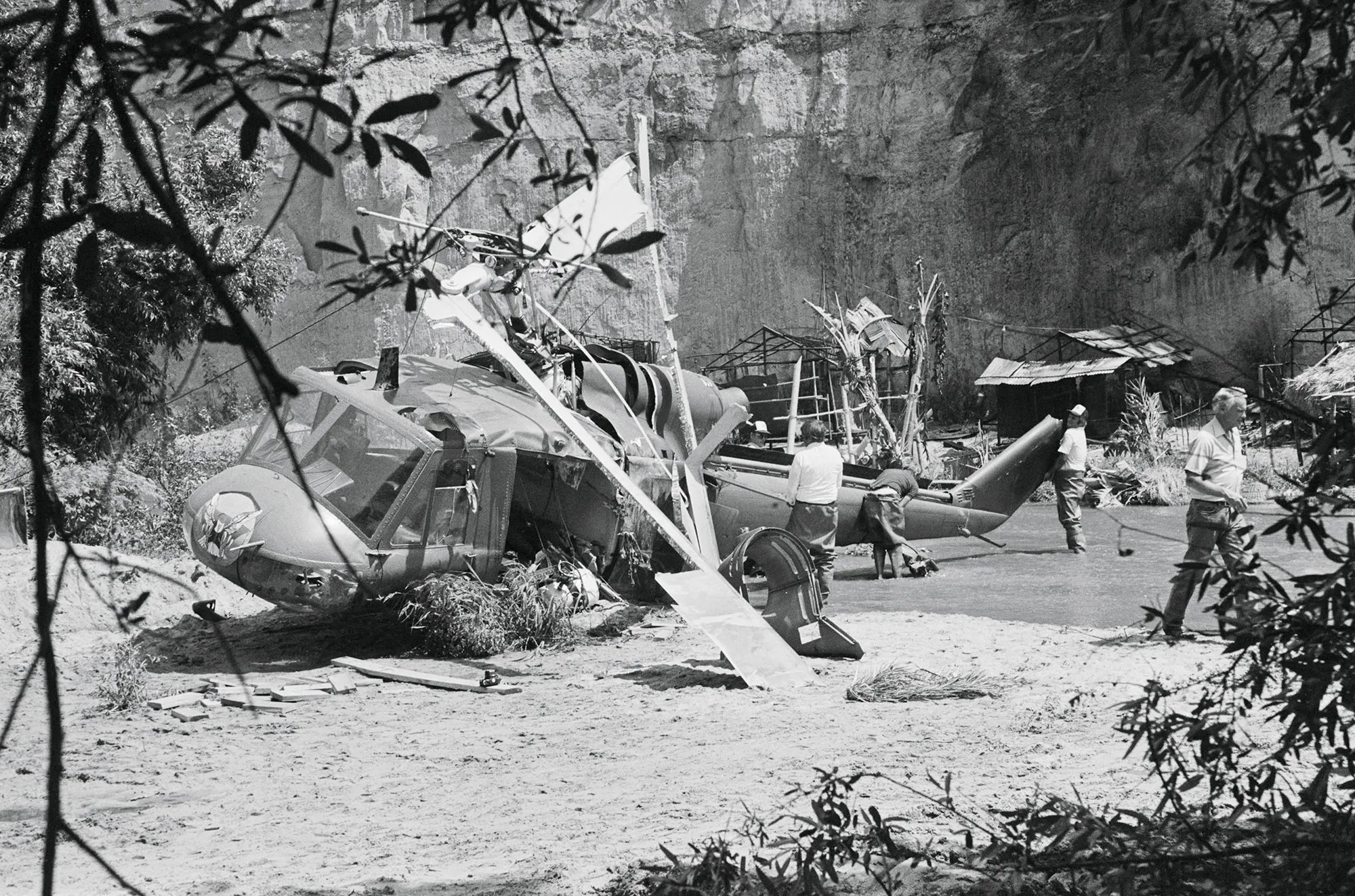
Back in 1988, authors Stephen Farber and Marc Green published their book “Outrageous Conduct: Art, Ego and the Twilight Zone Case.” The book had been released in the aftermath of the criminal trial of film director John Landis
That trial came about after an investigation of a fatal accident during the filming of John Landis’ segment of “Twilight Zone: The Movie” in 1982. Those killed included the actor Vic Morrow, known for the 1960s CBS television series “Combat!” and, oddly enough, the father of the actress Jennifer Jason Leigh. Also killed with Morrow were the inexperienced child actors Myca Dinh Le and Renee Shinn Chen.
Farber and Green’s narrative covered vast ground. First was Landis’s rise to the A-list of directors in 1982, then the particulars of the incident itself, and finally coverage of the aftermath. Interwoven along the way were a surprisingly large number of well-known Hollywood figures of the era who became in some way associated with the case (and who would go to lengths to cover their rears to avoid public criticism).
The Incident
The events at the center of the case unfolded on July 23, 1982, during the filming of a scenario set in the Vietnam War for Landis’ “Twilight Zone: The Movie” segment.
Special effects pyrotechnics simulating an explosive strike from a mortar round were detonated near the low-flying path of a hovering helicopter. However, the timing and positioning went disastrously wrong when the heavy helicopter became caught in the manufactured blast, spun out of control, and crashed directly on top of Morrow and the two child actors.
All three were killed instantly from the impact, with Morrow decapitated by the helicopter’s top rotor blades. The carnage played out in front of a horrified cast and crew who suddenly found themselves on the site of a real human tragedy rather than a fictional scene. It was an accident borne of unrelenting ambition, where safety protocols and child labor laws were skirted, corners cut, and the well-being of actors blatantly compromised in pursuit of a visceral aesthetic for the film sequence.
Post-Incident Bizarre Behavior and Insensitivity
In the aftermath of the deaths, Landis exhibited astonishingly insensitive behavior that only poured salt in the wounds for those affected. As recounted in “Outrageous Conduct,” he spoke at Vic Morrow’s funeral and gave a “rambling speech about how Morrow’s work in the movie had been ‘the best work he’s ever done'” – a tone-deaf and shocking tribute, to say the least.
Even more appallingly, when Steven Spielberg called Landis just 90 minutes after the fatal accident, Landis’ first words to the celebrated director were to ask if he “had a press agent” – exposing his immediate attempt to manage public relations rather than address the human tragedy that just occurred.
Other Key Figures and Early Case Proceedings
The book portrayed Kathleen Kennedy, Spielberg’s “bulldog” producer at the time, and her husband Frank Marshall as enabling Spielberg’s detached and childlike mindset by keeping him “in a little protective cocoon,” potentially shielding him from the adult responsibilities that may have helped prevent such risks on set. Spielberg’s own lawyer stoked more outrage with a statement implying the child victims’ parents were partly to blame for not trying to stop what they thought might be a harmful situation for their children.
The Grand Jury
The legal proceedings were surreal from start to finish, with Landis literally sitting around in the same room as the parents of the dead children during the grand jury testimony. Some crew members who chose to testify against Landis felt they were subsequently blacklisted as retaliation for speaking out against a powerful director. It was important to note that this case was the first time that a director was criminally indicted for conduct on a movie set.
While the set circumstances were increasingly publicized, Landis’ behavior during the investigation did not improve. One particularly bizarre moment came when Paramount Pictures, hoping to capitalize on the success of Landis’ “Trading Places,” pushed for the director to receive a Best Director Oscar nomination while his “Twilight Zone” trial was still pending.
Landis’ Defense and Courtroom Behavior
When Landis shockingly took the stand in his own defense at trial, he referred to Spielberg by the overly familiar “Steve” – a nickname that very few apparently used. He then tried to implicate Spielberg and producer Frank Marshall in signing off on the decision to have the child actors on set during the late-night shoot.
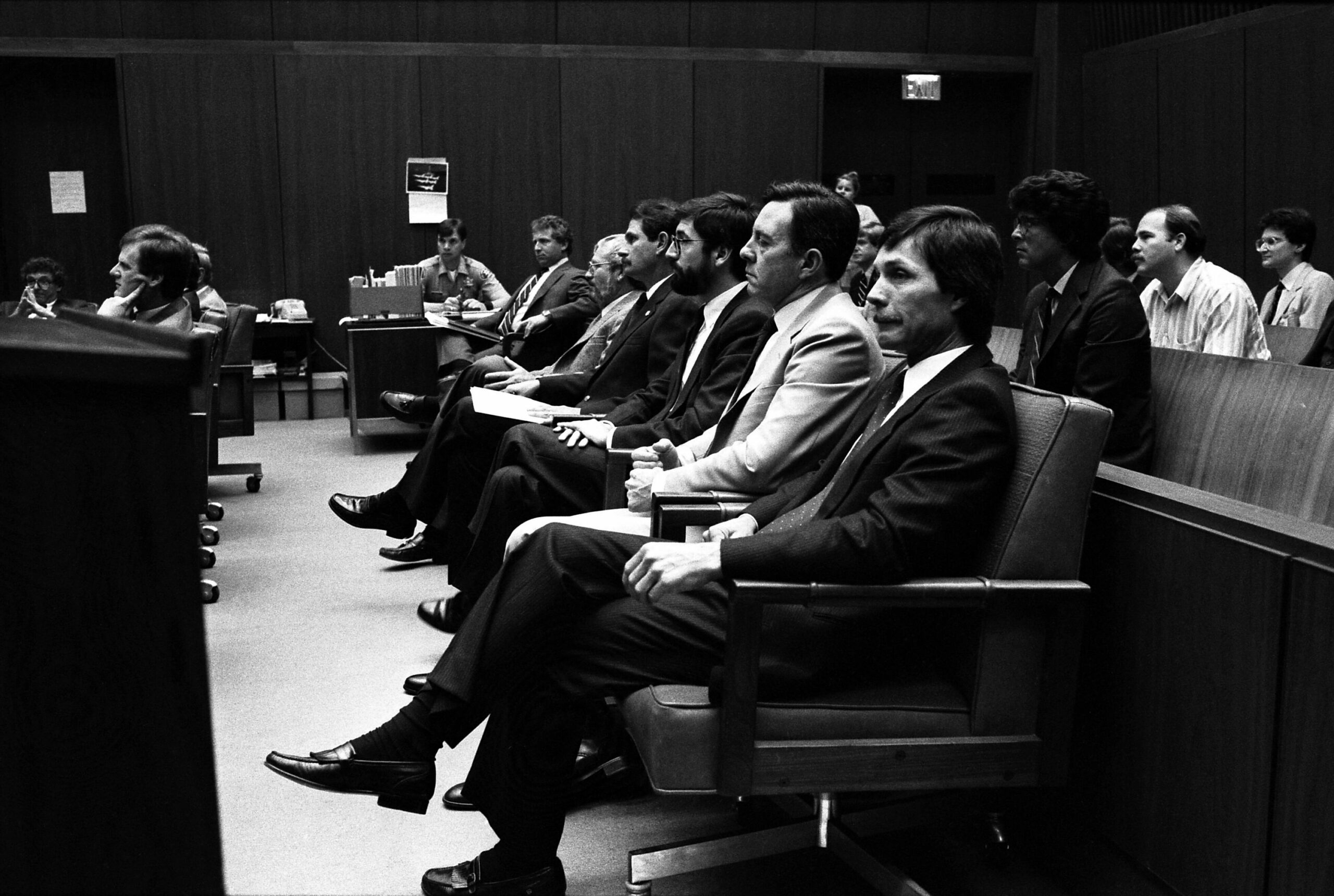
However, Landis could not stay on message, repeatedly making under-his-breath remarks to the District Attorney that got him reprimanded by his own attorneys. At one point, he very obviously tried to trip a former casting director who had testified for the prosecution, leading the defense to move him away from their table.
Landis’ testimony directly contradicted the majority of the witnesses, most of whom had no incentive to lie.
Prosecution Missteps
Despite the overwhelming evidence against Landis, the defense’s one advantage was the prosecution’s own self-inflicted mistakes. This included such missteps as introducing new witnesses during the trial that the defense picked apart and used to raise questions about their own conduct.
Infighting between the district attorneys running the initial grand jury case and the actual trial left the jury with the impression that the case against Landis was not as tight as it might have otherwise appeared.
The Verdict & Aftermath
After “long-winded, bogged down” closing arguments, the “tired” jury acquitted Landis of involuntary manslaughter after nine days of deliberation. They felt the charges were too severe yet could not agree on misdemeanor counts that would bring only minor punishment.
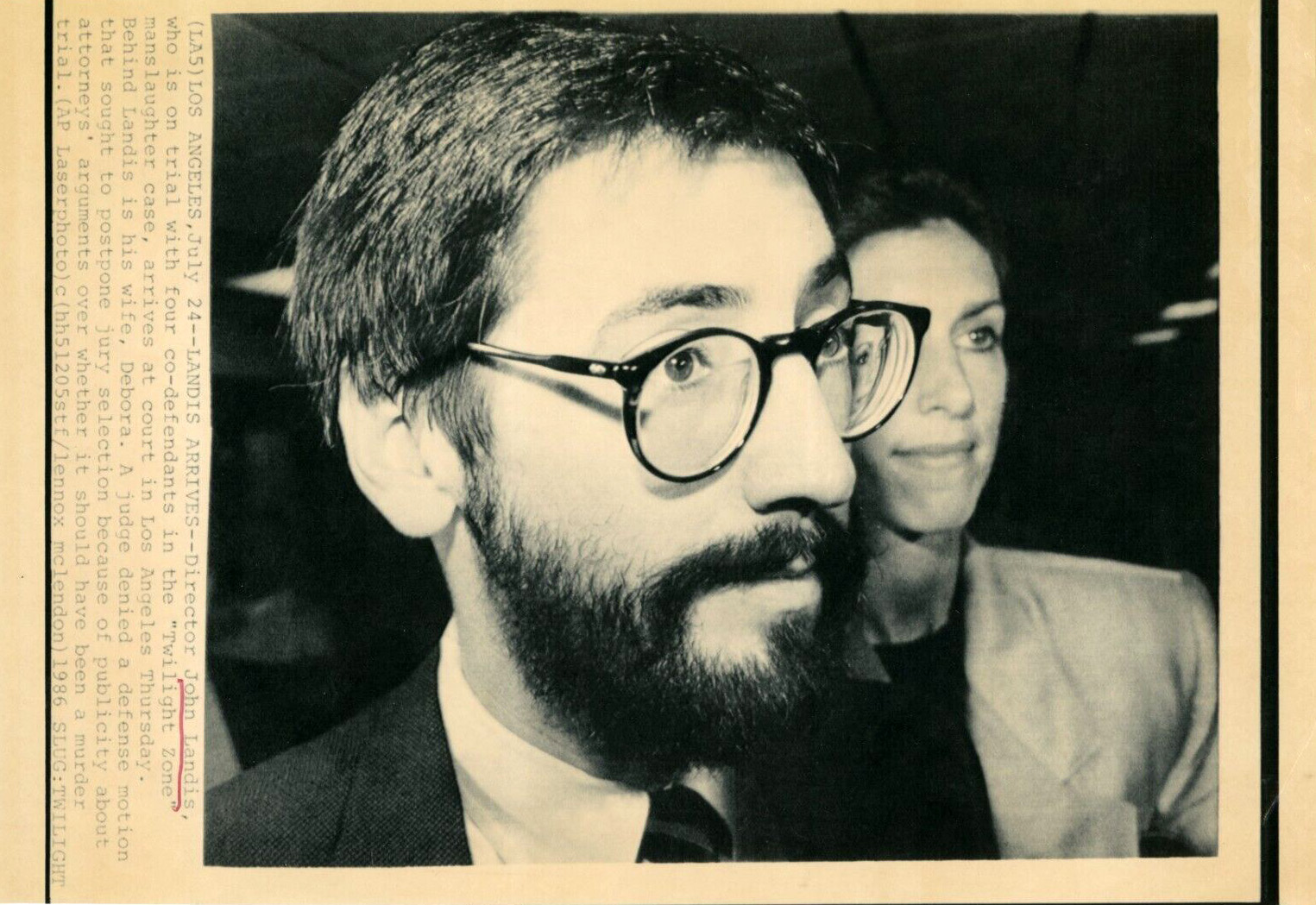
Eddie Murphy had starred in “Trading Places” and, feeling sorry for Landis in the wake of the trial, would insist to Paramount that Landis direct 1988’s “Coming to America.” Their relationship deteriorated on that film with Murphy quipping at a press conference that “Vic Morrow has a better chance of working with Landis than I do.”
Oddly enough, Landis was back again to direct Murphy in 1994’s “Beverly Hills Cop III.” Murphy’s subsequent quotes about Landis have not been favorable.
Legacy
The “Twilight Zone” tragedy exposed the insensitivities and power imbalances that have long been a staple of Hollywood. Well-connected figures like Landis could behave recklessly without facing severe consequences. The legal system proved unable to hold Landis and the production criminally accountable.
While violations of child labor laws and overwhelming safety negligence led to the deaths, the failed prosecution meant there were few ramifications for the decision-makers who cut corners. The dangerous on-set practices of the powerful were reinforced by the lack of accountability.
The indifference and mocking behavior in the aftermath compounded the tragedy. Spielberg and others prioritized public image and accolades over taking responsibility. Kathleen Kennedy enabled a childlike mindset that inhibited leadership. And Landis himself showed a remarkable lack of empathy and remorse.
Though accidents occur in filmmaking, the “Twilight Zone” case was unusual in that both a star actor and innocent children were involved. The incident and how it played out over several years in a pre-internet/pre-social media era looks much worse in hindsight given what seemed to be questionable ethics displayed by several key figures at the top of the entertainment industry of the 1980s. Safety, child welfare, and human lives took a backseat to ego, ambition, and protecting the reputations of those in power. While civil lawsuits brought some financial restitution for the victims’ families, there were only debatable professional or criminal repercussions for those most culpable.
Landis would go on to direct a string of big-budget films into the 1990s. So, the acquittal reinforced the message that even breathtaking negligence resulting in death would not jeopardize a career like his. In terms of on-set safety, things did change but it took the tragic deaths of Morrow and the children for the industry to finally update its antiquated safety protocols and implement protections against similar preventable accidents.
Landis’ career did stall out by the 2000s, after his 1990s-era films included several costly misfires. His son Max would come to some minor prominence in the 2010s as a screenwriter but Max’s own personal dramas and abuse accusations largely stopped his ascent by 2020. The rise of social media, leading to persistent attacks on his father, have changed the narrative on John Landis’ career.
Someone coming of age in the 1990s might have encountered the “Twilight Zone: The Movie” incident taking a back seat to film fan talk of the time. Instead, fans still admired Landis’ hot box office streak in the 1980s and had fervent appreciation for his cult films that were largely made in the late 1970s and early 1980s.
In contrast, someone coming of age after that time would be much more likely to encounter disparaging talk of John Landis mixed in with acknowledgment of his role in producing some film “classics.”
Landis’ career ultimately became a case study for how Hollywood would protect those who make money for the machine. When his career waned, he became less valuable and was less protected. His legacy has been eroded ever since.
As a document detailing the facts and figures that justify why this occurred, “Outrageous Conduct” remains a compelling and important read decades after it was first written.

D. S. Christensen has been an author and reviewer across various forms of media since he was a teenager. In his professional life, he has focused on blending creativity and technology.He has written numerous books, both fiction and non-fiction, on a wide variety of topics.
Purchase our publications on Amazon Kindle
Support our remarks with this referral link on Amazon.com
- Outrageous Conduct Reviewed: John Landis and the Twilight Zone Tragedy - March 17, 2026
- San Diego Comic-Con 2025 Analysis - August 1, 2025
- Over-sized KO Transformers Reviewed - March 29, 2025